
The short answer
What should you check before buying property with an arena?
Request construction and maintenance records, inspect the perimeter after rain, identify access and drainage routes, and budget for an independent specialist assessment. A visually level sand ring does not establish the condition of the supporting layers.
Source: Aiken County Planning & Development. Site-specific decisions require a qualified assessment.
Start with records, not appearance
Ask the seller, with permission, for construction or renovation bids, drainage drawings, material specifications, any permit records, maintenance history and previous repairs. Note who carried out the work and whether documents relate to this exact arena. Missing records do not prove a defect, but they can make inspection more important.
Check actual dimensions against your intended use rather than relying on listing descriptions. A training ring may not suit a competition layout or the number of horses you plan to ride.
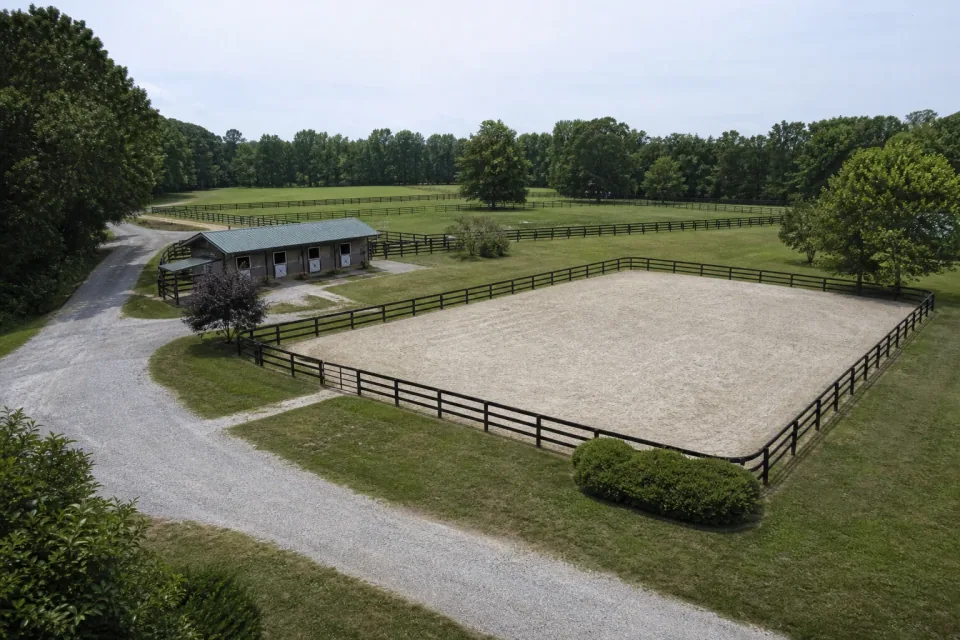
Walk the arena perimeter and working surface
- Look for washed-out edges, low spots, ruts, exposed stone and mixed material.
- Observe surrounding slopes, roof runoff and potential water entry points. Ask where drainage is discharged.
- Check fences, gates, access and whether future equipment or deliveries can reach the site.
- Ask when the arena was last watered or groomed, and whether conditions change markedly after rain.
- Document what you can observe safely; do not excavate or test ride a potentially unsafe surface.
Photographs and seller accounts are useful context, not proof that the base is structurally suitable. Obtain a separate specialist assessment for uncertain conditions.
Understand local site and approval risks
An Aiken-area mailing address may not tell you which authority reviews a parcel. Consult the local permit and planning guide for jurisdiction, disturbances, easements, drainage and proposed changes. Ask an appropriate property professional to review records and restrictions. Existing construction is not proof that new expansion or alterations are approved.
Estimate near-term work separately from purchase price
Consider three budget scenarios: routine upkeep, surface renewal, and more extensive base or drainage rehabilitation. Request a written independent assessment and estimate where the evidence warrants it. The repair-versus-rebuild guide helps organize those scenarios; the cost planning tools help compare quote components.
Allow for downtime, access constraints, water supply, grooming equipment and the expected maintenance workload. Do not assume the seller's past spending is a reliable indication of today's repair cost.
Prepare for a specialist visit
With the property owner's authorization, provide dimensions, location, discipline, photographs, construction history and your intended timeline. Ask the specialist to explain which observations are confirmed, which remain uncertain, and whether further testing is needed before pricing. This guide does not replace a property inspection, appraisal, survey, legal review or engineering assessment.
If you are not authorized to request work yet, use the checklist privately and arrange access through the owner or your representative.
Plan your next arena project
Describe the property, work needed and your preferred timing. You can include dimensions and budget if known.
Project enquiriesSources and further reading
- University of Georgia Cooperative Extension — The Dirt on Arena Footing, October 2023 (reviewed November 24, 2026)
- French Institute for Horses and Riding (IFCE) — Designing an Arena (technical background, not South Carolina code; reviewed November 24, 2026)
- Aiken County Planning & Development — jurisdiction and planning information (reviewed November 24, 2026)